What Is a VIN Code and What Information Can You Get by Checking It?
Origin and Brief History of the VIN Code
The acronym VIN stands for Vehicle Identification Number.
Automakers began marking vehicles as early as the 1950s, but there was no standardized system at the time. Each company used its own format, causing significant confusion.
The situation changed completely in 1981, when the U.S. National Highway Traffic Safety Administration (NHTSA) and the International Organization for Standardization (ISO) established a universal standard. From that point on, it was mandated that every vehicle's VIN code must consist of exactly 17 characters (letters and numbers).
Note: To prevent fraud and misreading, the letters I, O, and Q are never used in a VIN code because they closely resemble the numbers 1 and 0.
What Does a VIN Code Consist Of? (Detailed 17-Character Breakdown)
The 17 characters of a VIN code are not a random sequence. They are divided into 3 main sections:
[ WMI ]  [     VDS     ]  [        VIS        ]
 1 2 3    4 5 6 7 8  9     10 11 12 13 14 15 16 17
1. WMI (World Manufacturer Identifier) — Characters 1–3
This section identifies the manufacturer globally:
1st Character: Country of origin (e.g., 1, 4, 5 — USA; J — Japan; W — Germany; K — South Korea).
2nd & 3rd Characters: Brand and manufacturing division (e.g., WBA — BMW, 1FA — Ford, JTE — Toyota).
2. VDS (Vehicle Descriptor Section) — Characters 4–9
Describes the vehicle's technical specifications:
Characters 4–8: Information about the model, engine type, body style, transmission, and safety systems.
9th Character: Check Digit, used to verify the authenticity of the VIN and detect forgery.
3. VIS (Vehicle Identifier Section) — Characters 10–17
The vehicle's individual identification sequence:
10th Character: Model year (e.g., L — 2020, M — 2021, N — 2022, etc.).
11th Character: Assembly plant.
Characters 12–17: Sequential production serial number.
What Information Can You Obtain with a VIN Code?
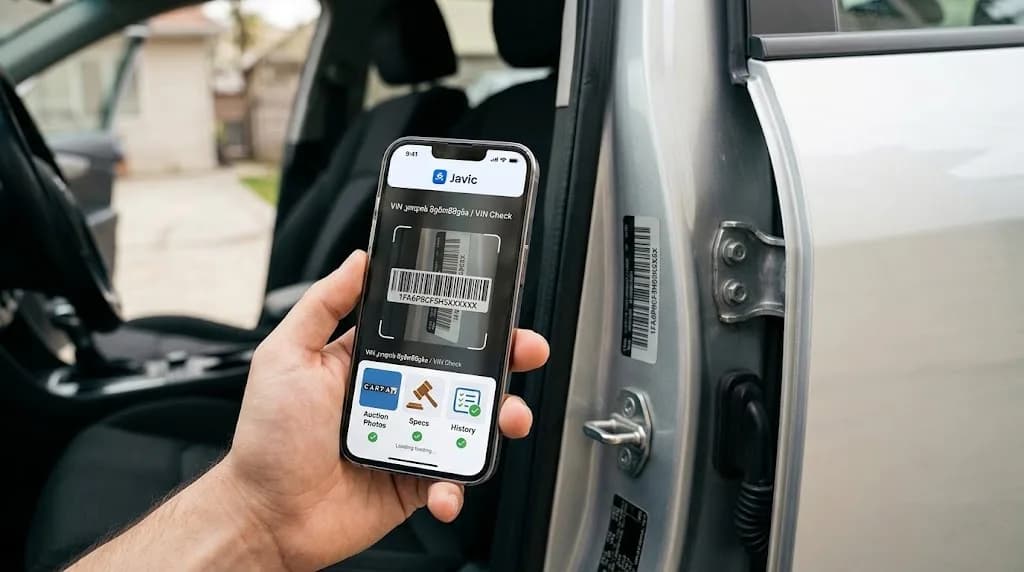
Checking a VIN code grants access to databases that reveal the vehicle's entire "life story":
Accidents and Damage: Whether the car was involved in road accidents and the severity of the damage.
Auction History and Photos: Original photos of U.S. imported cars prior to purchase.
Odometer Mileage: Verified mileage readings across different periods (detecting rollbacks).
Number of Previous Owners: How many hands the car has passed through.
Service and Repair History: Records of regular maintenance and oil changes.
Title Statuses: Checking if the car is reported stolen, flood-damaged (Salvage/Flood), or written off.
Manage Your Car Smartly with Javicapp
A VIN code is not only vital when buying a car — it serves as your vehicle's digital passport in daily life. Inside Javicapp, using your VIN code allows you to:
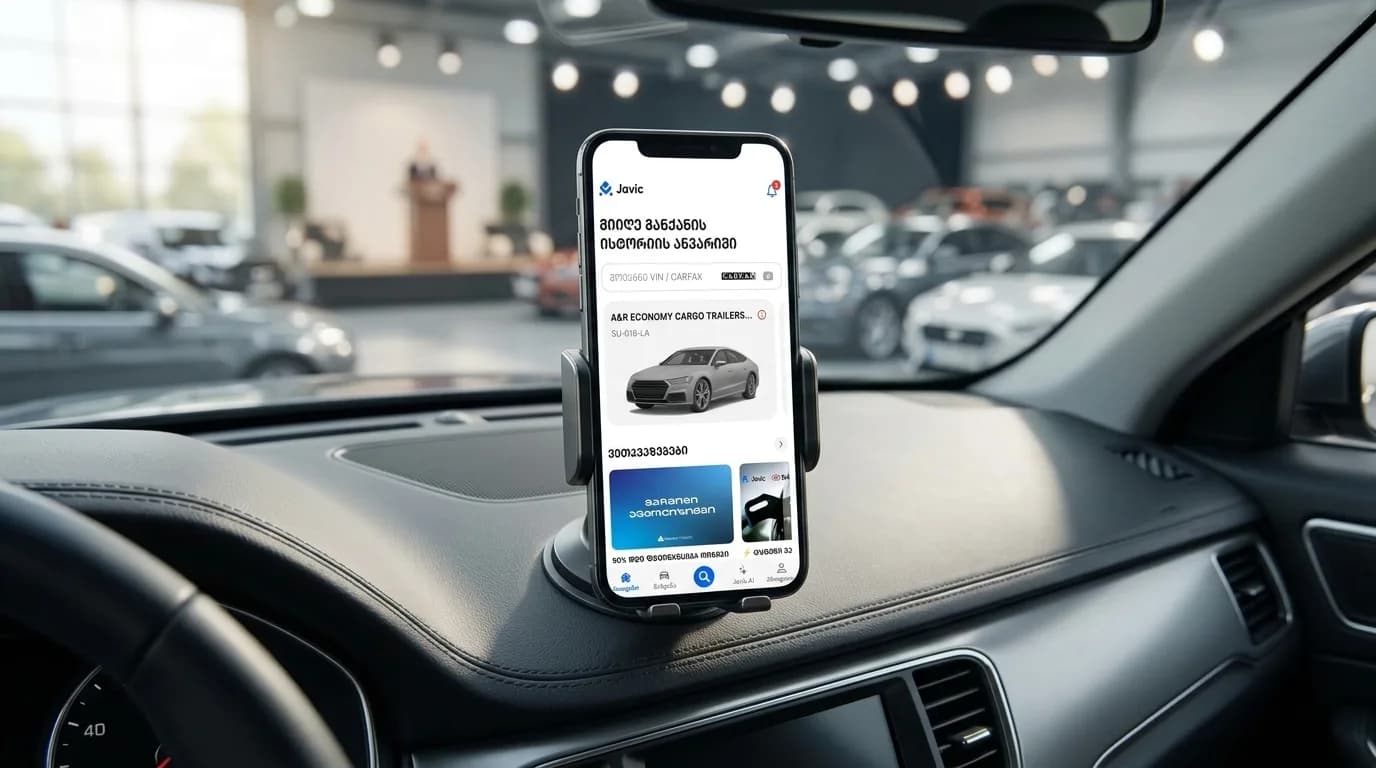
Purchase Full Carfax Reports: Get complete history reports, auction photos, and mileage records for U.S. imported vehicles in seconds.
Log and Manage Performed Services: Easily record any service completed on your vehicle (oil changes, brake pad replacements, technical repairs, and expenses).
Build a Digital Service Record: Tracking and managing performed services ensures you always know the true condition of your car.
This digital database will be essential for upcoming features that Javicapp will gradually introduce to users — including personalized maintenance recommendations, scheduled service reminders, and demonstrating a well-maintained service history when selling your car.
 Share on Facebook
 Share on X